Back to Blog March 22, 2026

Why Am I Getting Spam Emails? Understanding and Solutions

Discover the reasons behind your overflowing spam inbox and effective strategies to reduce unwanted emails.

Why Am I Getting Spam Emails? Understanding and Solutions

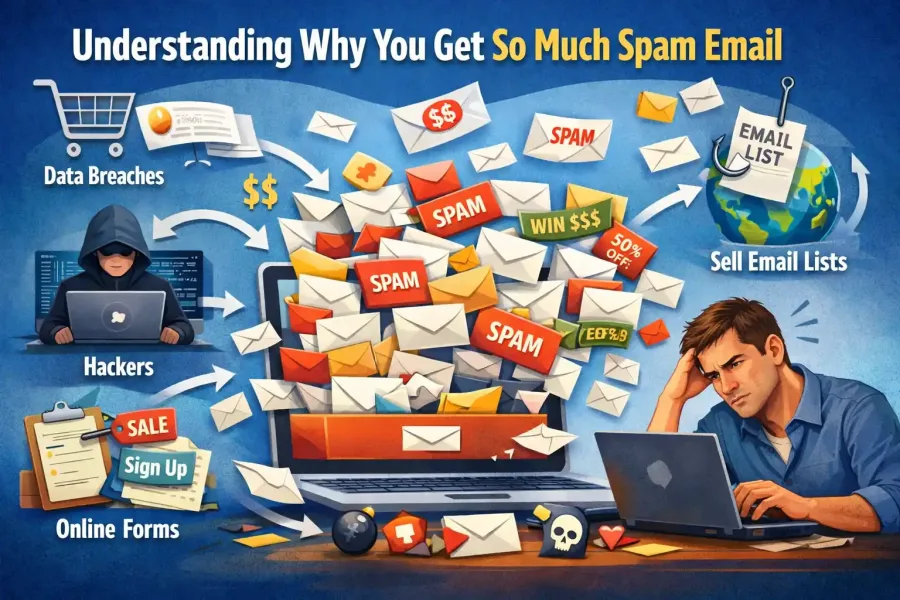
Have you ever wondered, "why am I getting spam emails?" If so, you're not alone. Spam emails are an unfortunate reality for many internet users today, cluttering inboxes and making it challenging to find important messages. According to recent studies, a significant portion of all email traffic—over 50%—is attributed to spam, which has become an overwhelming issue for users across the globe.

The rise in spam emails can be attributed to various factors, including the proliferation of online services that require email addresses for registration. As businesses expand their digital footprints, they often collect users' email addresses, sometimes without adequate privacy measures in place. This can lead to your email address being sold or shared, resulting in a surge of unwanted messages filling up your inbox.

Common Reasons Behind Your Spam Email Problem

Understanding why you are receiving so many spam emails is essential for taking steps to mitigate the issue. One of the primary reasons is that your email address has likely been added to a mailing list without your consent. Many companies engage in aggressive marketing tactics, leading to your information being shared or sold to third parties. As reported by Bitdefender, this is one of the leading causes of increased spam.

Another reason could be your online activities. Signing up for various online services often requires an email address, which can inadvertently expose you to spam. If you use the same email address for multiple registrations, especially on less secure websites, you increase the chances of your email being harvested by spammers. It's a practice known as "email scraping," where bots collect email addresses from a wide range of sources, making it easier for them to target victims with their spam campaigns.

How Spam Filters Work and Why They Sometimes Fail

Spam filters are designed to identify and block unwanted emails before they reach your inbox. These filters use machine learning algorithms that continuously adapt to new spam tactics. However, spammers are also evolving, often finding ways to outsmart these filters, as noted in discussions on platforms like Reddit. They exploit the weaknesses in spam detection systems, which is why new spam emails can often slip through the cracks.

Moreover, as spam filters learn from past email behaviors, they can sometimes mistakenly classify legitimate emails as spam, leading to important messages getting lost. Users might find themselves digging through their spam folders in search of emails that may contain vital information. This balancing act between blocking spam and allowing legitimate correspondence is a constant challenge for email providers.

Practical Steps to Reduce Spam Emails

Now that you understand why you might be asking, "why am I getting spam emails?" it’s time to take action against this digital nuisance. One effective method is to use a temporary email service like TempEmailBox. This service allows you to create a disposable email address for one-time use, helping you avoid giving out your primary email address to websites that may end up flooding your inbox with junk.

Another strategy is to be cautious about which sites you provide your email address to. Before signing up for a service, read the privacy policy to understand how your data will be used. Additionally, consider using filters within your email application to categorize and manage incoming emails effectively. Many email platforms offer settings that allow you to block specific domains or create rules for automatically sorting messages.
Related Article

Why You Should Never Use Your Real Email for Signups
Mar 22, 2026

Why You Should Never Use Your Real Email for Signups

Using your real email for signups can lead to spam, privacy issues, and security risks. Discover sa…

Finally, consider using services that can help manage your subscriptions. Tools that help unsubscribe from unwanted newsletters can cleanse your inbox, providing a more organized and manageable email experience. For more tips on protecting your privacy and preventing spam, check out our article on Free Temporary Email: Protect Your Privacy and Avoid Spam.

Understanding Common Spam Triggers

To answer the question, why am I getting spam emails, it’s crucial to understand what triggers spam filters and causes your inbox to fill up with unwanted messages. One significant factor is your email address's visibility on public platforms. If you’ve ever posted your email on social media, forums, or websites, it’s likely been harvested by bots designed to collect addresses for spamming purposes. According to a report by Spamhaus, over 80% of spam email is generated by automated systems that scrape the web for email addresses.

Moreover, subscribing to newsletters or services without careful consideration can also lead to an influx of spam. Some companies might share your email with third-party marketers, leading to a deluge of promotional content. It’s essential to read the fine print before signing up for any service, as many will include clauses that allow them to share your information. Additionally, opting for “free trials” without a clear understanding of the terms can also result in unwanted emails once the trial period ends.

Best Practices for Reducing Spam

Now that you understand the triggers, you can implement some best practices to help minimize the number of spam emails you receive. First, consider creating a secondary email address specifically for sign-ups, subscriptions, and online purchases. This way, your primary email remains relatively spam-free. Many email providers allow you to create aliases or use a different address that forwards to your main inbox. This separation helps keep your main email clean and can vastly reduce the clutter caused by promotional messages.

Another effective strategy is to regularly update your email preferences and unsubscribe from services you no longer use. Most legitimate companies provide an option to unsubscribe at the bottom of their emails. If you no longer wish to receive emails from a particular source, don’t hesitate to take this action. Websites like Unroll.Me can assist you in managing your subscriptions, making it easier to declutter your inbox.

Leveraging Email Filters and Reporting Spam

Utilizing email filters is another powerful way to combat spam. Most email services provide options to filter incoming messages based on specific criteria, such as the sender’s address or keywords in the subject line. By setting up filters to automatically sort emails into designated folders or mark them as spam, you can significantly reduce the time spent managing unwanted messages. For instance, Gmail allows users to create filters that can automatically delete or archive emails based on certain parameters.

If you find yourself bombarded with spam, reporting these emails can also help. Most email providers have a built-in option to mark messages as spam. When you report spam, you not only clean up your inbox but also aid in improving the spam filter’s effectiveness for all users. According to the Federal Trade Commission, regularly reporting spam emails helps to protect the community at large from similar unwanted communications.

Related Article

How to Use Temporary Email for Safe Online Signups
Mar 21, 2026

How to Use Temporary Email for Safe Online Signups

A simple guide to protect your privacy and avoid spam when registering online

You Might Also Like

View All