Back to Blog March 24, 2026

Understanding Why You Get So Much Spam Email

Discover the reasons behind the influx of spam email and how to reduce it.

Understanding Why You Get So Much Spam Email

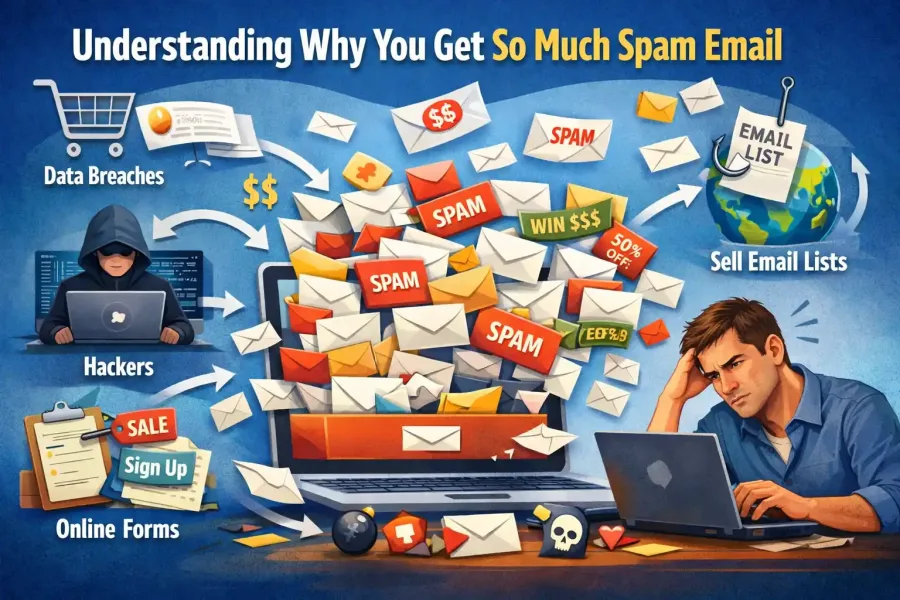
Spam email is a frustrating reality for many internet users today. These unsolicited messages clutter our inboxes, distract us from important communications, and can even pose security risks. Understanding why you receive so much spam email is crucial for managing your digital life and safeguarding your personal information. In this article, we will delve into the reasons behind the overwhelming influx of spam and provide insights on how to curb it.

What Causes Spam Email?

Spam email, also known as junk email, refers to unsolicited messages sent in bulk to various recipients. One of the primary reasons you might be inundated with spam email is the result of automated systems known as bots. These bots scour the internet, searching for email addresses to harvest. This process is often facilitated by subscription bot attacks, which use web crawlers to target subscription services and collect contact information without consent, leading to a deluge of unwanted emails source.

Another factor contributing to the rise in spam email is the sharing of personal information online. When you sign up for newsletters, promotions, or even free trials, you often provide your email address. If these companies do not have strong privacy policies or choose to sell your data to third parties, your email address can end up on various lists that are circulated among spammers. It’s important to be cautious about where you share your email and to read privacy policies carefully.

Types of Spam Email You Might Encounter

Spam email can take various forms, each with its own intent. The most common types include promotional spam, phishing attempts, and scams. Promotional spam consists of unsolicited advertisements, often from companies trying to sell products or services. While some may be legitimate, many are simply bulk messages sent without targeting specific individuals.

Phishing attempts are particularly dangerous and can compromise your personal information. These emails often appear to be from reputable sources, tricking users into providing sensitive data, such as passwords or credit card numbers. In fact, Google blocks around 100 million phishing emails daily, highlighting the scale of this issue and the importance of being vigilant when it comes to suspicious emails source.

Additionally, there are scam emails that promise unrealistic returns or ask for financial assistance. These messages often prey on individuals’ emotions or desires and can lead to significant financial loss if not recognized in time. It's crucial to educate yourself about these different types of spam email to better protect yourself.

How to Reduce Spam Email in Your Inbox

Reducing the amount of spam email you receive can be achieved through several proactive steps. First, consider using a temporary email address when signing up for online services. This approach allows you to avoid giving out your primary email, significantly reducing the risk of spam. Services like TempEmailBox provide disposable email addresses that can be used for one-time registrations, ensuring your main inbox remains clean.

Another effective strategy is to utilize spam filters. Many email providers offer built-in filtering options that can automatically detect and redirect spam emails to a designated folder. Regularly reviewing and adjusting spam filter settings can enhance their effectiveness, ensuring that important emails are not mistakenly categorized as junk. For more tips on managing spam, check out our article on Best Ways to Protect Your Inbox from Spam Emails.
Related Article

Why Am I Getting Spam Emails? Understanding and Solutions
Mar 22, 2026

Why Am I Getting Spam Emails? Understanding and Solutions

Discover the reasons behind your overflowing spam inbox and effective strategies to reduce unwanted…

Finally, it’s advisable to unsubscribe from unwanted newsletters or promotional emails. Most legitimate businesses offer an option to unsubscribe at the bottom of their emails. Taking this step can significantly reduce the volume of spam email you receive, allowing you to focus on important messages.

Understanding the Types of Spam Email

Spam email can be categorized into several types, each with distinct characteristics and purposes. Common types include promotional emails, phishing attempts, and malware distribution. Promotional emails are often sent by legitimate businesses trying to market their products or services. While some promotional emails can be beneficial, many are unsolicited and clutter your inbox. Phishing attempts, on the other hand, aim to deceive you into providing personal information by masquerading as trusted entities, like banks or online services. These emails often contain links to fake websites designed to steal sensitive data.

Another prevalent type of spam email involves malware distribution, where the sender attempts to infect your computer with viruses or ransomware. This type of spam is particularly dangerous as it can lead to severe security breaches. According to a report by the Spamfighter, malware-related spam emails have significantly increased over the past few years, highlighting the evolving tactics of spammers. Understanding these types of spam is crucial for identifying and avoiding potential threats in your inbox.

The Role of Email Harvesting in Spam Email

Email harvesting is a technique used by spammers to collect email addresses from various sources. This can be achieved through web scraping, where automated bots scan websites and forums for publicly available email addresses. Additionally, spammers might purchase lists of email addresses from dubious sources, further expanding their reach. As a result, your email address might end up in a spammer's database without your knowledge, leading to an influx of unsolicited messages.

To mitigate the risks of email harvesting, consider using disposable email addresses for signing up for newsletters or online accounts. Services like Temp Mail allow you to create temporary email addresses that can help protect your primary email from being harvested. Furthermore, avoid publishing your email address publicly on social media or websites, as this increases the chances of being targeted by spammers.

How to Combat Spam Email Effectively

Combating spam email requires a combination of proactive measures and effective use of available tools. Most email providers offer robust spam filters that automatically detect and segregate spam messages from your inbox. However, these filters are not foolproof, and some spam emails may still slip through. Regularly marking unwanted emails as spam not only helps your email provider improve its filtering system but also reduces the chances of similar emails reaching your inbox in the future.

In addition to using spam filters, consider employing third-party solutions that offer enhanced spam protection. Tools like Spamihilator can provide an additional layer of security by filtering out unwanted emails before they reach your inbox. Furthermore, being cautious about where you share your email address can significantly reduce the amount of spam you receive. Opting out of marketing communications whenever possible and being wary of sharing your email on unfamiliar websites can go a long way in keeping your inbox spam-free.

Related Article

Why You Should Never Use Your Real Email for Signups
Mar 22, 2026

Why You Should Never Use Your Real Email for Signups

Using your real email for signups can lead to spam, privacy issues, and security risks. Discover sa…

You Might Also Like

View All